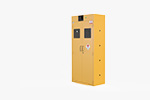
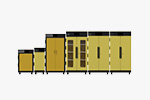
Laboratory ventilation systems are an essential part of maintaining a safe laboratory environment. Whether in chemical experiments, biological research, or precision analytical testing, hazardous gases, vapors, and airborne contaminants generated during experiments must be effectively controlled through professional ventilation systems.
As laboratory construction concepts continue to evolve, traditional ducted ventilation systems and ductless filtration technologies have become the two mainstream solutions in modern laboratories. So, what are the differences between them, and how should laboratories choose the most suitable solution?
1. Overview of Traditional Laboratory Ventilation Systems
Traditional laboratory ventilation systems typically include:
Indoor air conditioning and make-up air systems
Centralized exhaust systems
Waste gas treatment systems
Local ventilation equipment
Local ventilation equipment commonly includes:
Fume hoods
Biological safety cabinets
Atomic absorption hoods
Flexible extraction arms
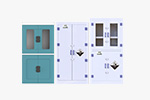
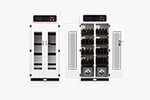
Ventilated chemical cabinets
Ventilation systems for other laboratory instruments
Together, these systems form a comprehensive laboratory airflow control solution designed to maintain safety and air cleanliness.
2. Characteristics of Traditional Ducted Fume Hoods
A traditional ducted fume hood is not an independent device. Its overall performance depends not only on the hood itself, but also on laboratory layout, ductwork design, and the entire ventilation system.
Main Features of Traditional Ventilation Systems
(1) Complex System Structure
Traditional ventilation systems usually involve:
As a result, the entire system is relatively complex.
(2) Difficult to Achieve Precise Control
Since multiple fume hoods often share the same ventilation system, precise single-point control can be difficult.
Different laboratory areas may require different airflow volumes, increasing system balancing complexity.
(3) High Duct Installation Costs
Laboratory ductwork projects often require:
Installation costs can become especially high when laboratories are located on lower floors of multi-story buildings.
Improper installation or insufficient maintenance may also cause contaminated air to re-enter the workspace through openings such as HVAC ducts or windows, reducing ventilation efficiency.
(4) Higher Energy Consumption and Maintenance Costs
Traditional full-exhaust systems continuously remove conditioned indoor air while introducing fresh outdoor air.
This results in:
Increased HVAC energy consumption
Higher fresh air treatment costs
More complicated maintenance
Regular inspection requirements
Overall operating costs are relatively high.
3. Classification of Traditional Fume Hoods
(1) By Exhaust Method
(2) By Air Circulation Method
Full Exhaust Fume Hood
Uses indoor air as supply air and exhausts contaminated air outdoors.
Make-Up Air Fume Hood
Introduces outdoor air directly into the hood before exhausting it outdoors.
(3) By Airflow Control Method
Standard Fume Hood
Uses manual damper adjustment to control airflow.
Variable Air Volume (VAV) Fume Hood
Automatically adjusts airflow through sensors to maintain a stable face velocity.
(4) By Function
Ducted fume hood without built-in fan
Fume hood with built-in fan
Filtered ductless fume hood
Fume hood with waste gas treatment device
4. Five Core Functions of a Fume Hood
(1) Hazardous Gas Exhaust
Effectively removes toxic, harmful, and odorous gases.
(2) Airflow Control
Maintains stable airflow to prevent contaminants from escaping.
(3) Environmental Isolation
Creates a protective barrier between the operator and hazardous substances.
(4) Corrosion and Heat Resistance
Suitable for demanding laboratory environments.
(5) Air Exchange and Make-Up Air
Removes contaminated air while introducing fresh air into the laboratory.
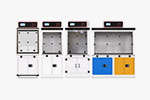
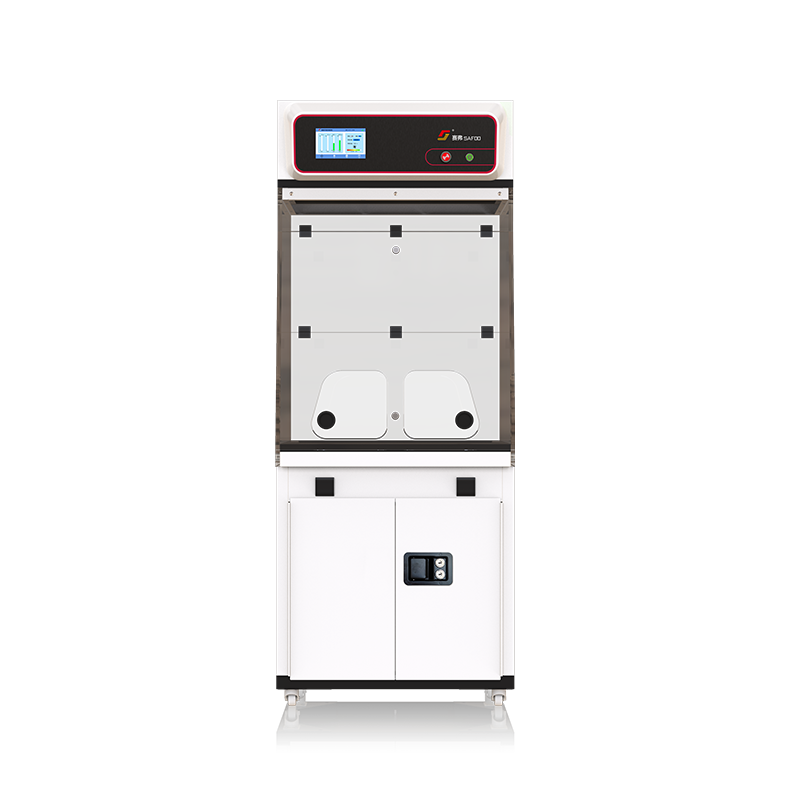
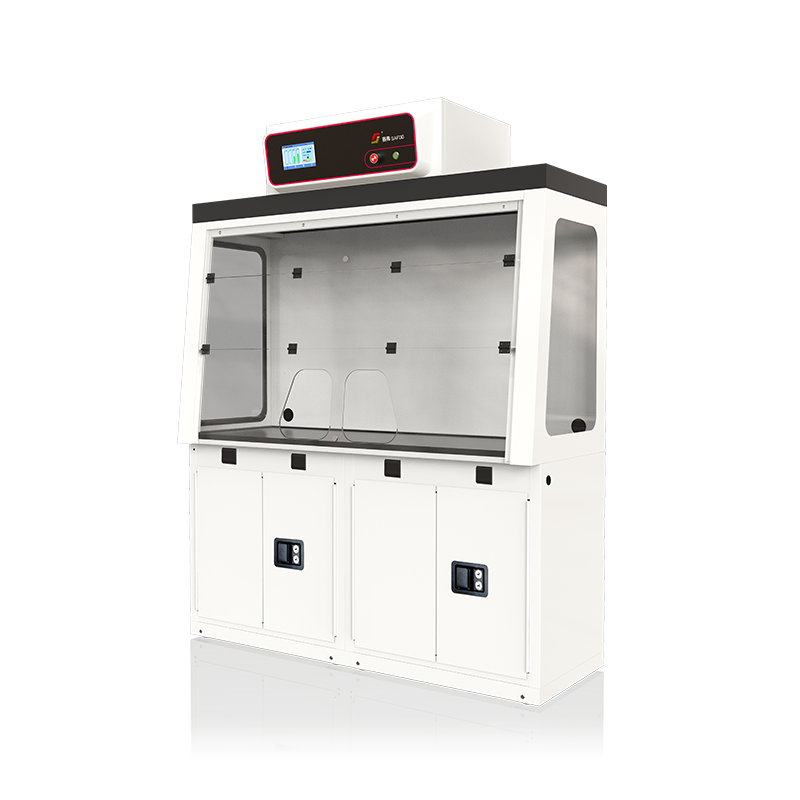
5. What Is a Ductless Fume Hood?
A ductless fume hood, also known as a:
is a self-contained air purification device.
It uses high-efficiency filtration systems to remove harmful gases, vapors, and particles generated during laboratory operations before recirculating clean air back into the laboratory.
Unlike traditional ducted systems, ductless fume hoods do not require external ductwork, making installation much simpler and more flexible.
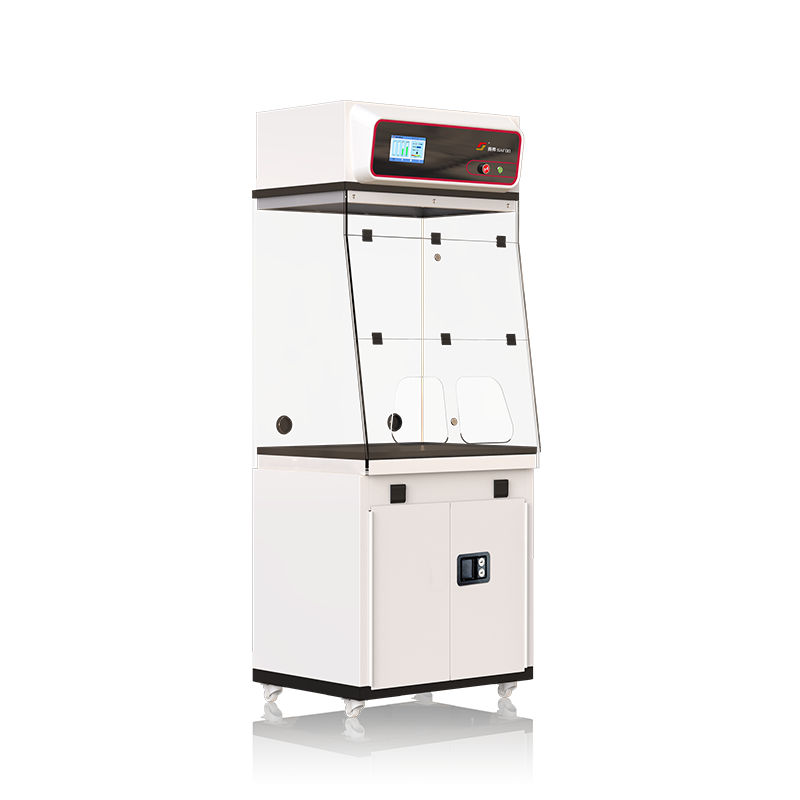
6. Differences Between Ducted and Ductless Fume Hoods
(1) Traditional Ducted Fume Hood
Contaminated air is exhausted outside the building through duct systems.
Fresh air is then supplied back into the laboratory through HVAC systems.
(2) Ductless Fume Hood
Contaminated air is filtered directly through high-efficiency filters.
Clean air is recirculated back into the laboratory without external ductwork.
7. Working Principle of Ductless Fume Hoods
(1) Negative Pressure Protection
Air is drawn from the laboratory into the cabinet, creating a negative-pressure environment.
Stable face velocity forms a natural barrier between the operator and hazardous chemicals.
(2) Comprehensive Filtration
Toxic gases and particles are captured by the filtration system.
Specialized filter media remove harmful contaminants.
(3) Clean Air Recirculation
Filtered clean air is returned to the laboratory.
This helps reduce environmental contamination.
(4) Continuous Air Purification
The hood continuously filters laboratory air, helping improve overall indoor air quality.
8. Advantages of Ductless Fume Hoods
Enhanced Safety
Advanced filtration technology
Integrated modular design
Filter saturation monitoring
Toxic gas concentration monitoring
Continuous face velocity monitoring
24-hour remote monitoring capabilities
Greater Flexibility
No connection to building exhaust systems required
Plug-and-play installation
Easily movable
Flexible installation locations
Convenient laboratory modifications
Environmentally Friendly
Harmful gases are filtered before release
Reduced environmental pollution
Significant energy savings
Energy consumption can be reduced by more than 70%
More Economical
No duct installation required
No rooftop exhaust fan needed
Reduced HVAC energy consumption
Lower maintenance costs
Lower long-term operating expenses
9. How to Choose the Right Laboratory Ventilation Solution
(1) Single or Small-Scale Laboratory Applications
Ductless fume hoods are often the preferred solution.
They offer lower overall costs, simple installation, and easy relocation.
(2) Large-Scale Centralized Laboratory Applications
Traditional ducted systems provide greater design flexibility for centralized laboratory layouts.
Proper planning can reduce overall infrastructure costs.
(3) A More Practical Combined Solution
Modern laboratories increasingly adopt a hybrid approach:
“Traditional centralized exhaust systems + ductless fume hoods”
By dividing laboratory areas according to their functions, laboratories can achieve better safety, flexibility, and economic efficiency.
10. Conclusion
As laboratories continue evolving toward smarter, safer, and more energy-efficient designs, laboratory ventilation solutions are also advancing.
Traditional ducted ventilation systems remain suitable for large centralized laboratories, while ductless fume hoods are becoming increasingly popular due to their flexibility, safety, environmental benefits, and cost efficiency.
By selecting the right solution based on laboratory applications, space conditions, and budget, laboratories can achieve a safer, more efficient, and more sustainable working environment