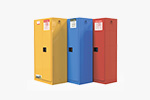
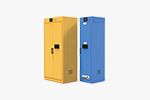
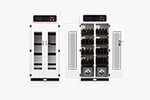
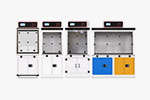
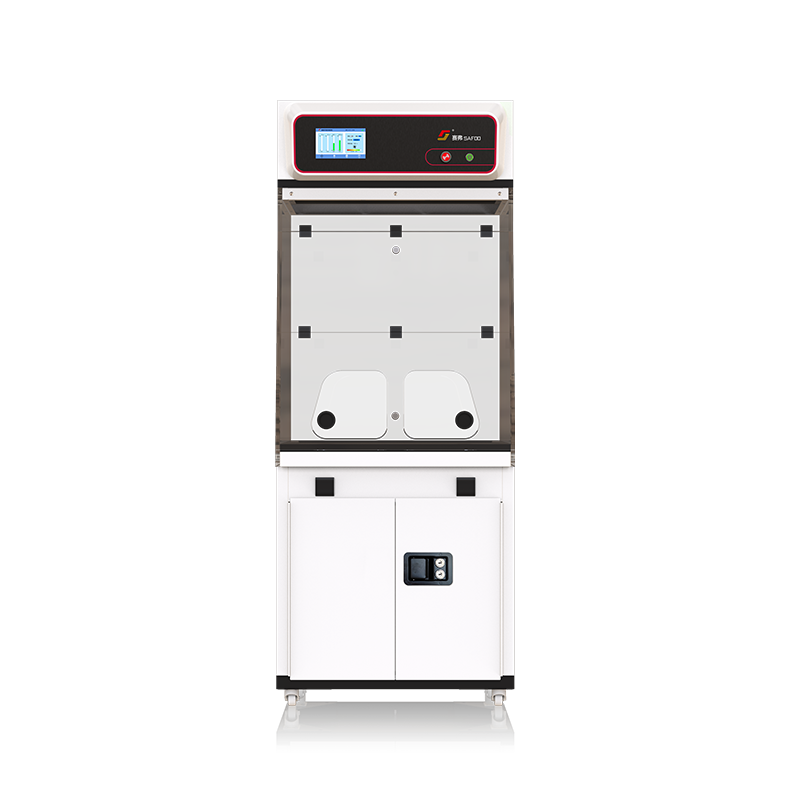
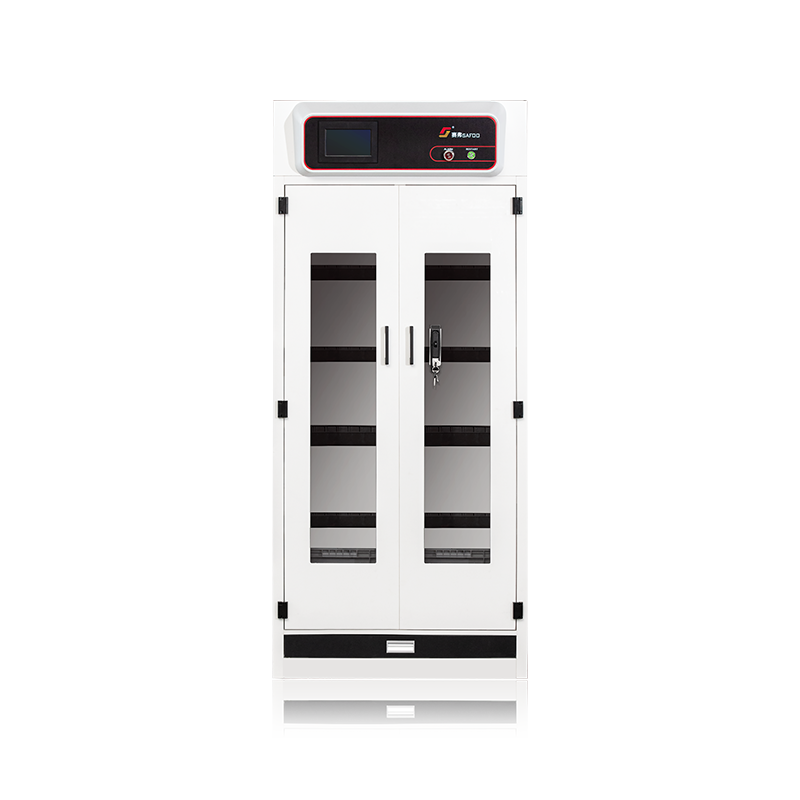
A ductless fume hood is a laboratory safety device that does not require external ductwork and purifies hazardous gases and particulates through a built-in filtration system. Compared with traditional ducted fume hoods, ductless fume hoods offer advantages such as flexible installation, energy efficiency, environmental protection, and convenient maintenance.
By properly selecting filters, ductless fume hoods can effectively adsorb toxic and hazardous gases, volatile organic compounds (VOCs), acid and alkaline vapors, as well as airborne particles generated during laboratory operations, providing a safer and cleaner working environment for laboratory personnel.
1. Applications of Ductless Fume Hoods
Applicable Industries
Ductless fume hoods are widely used in:
Research institutes
Universities and colleges
Inspection and quarantine institutions
Healthcare and medical facilities
Food industry
Pharmaceutical industry
Environmental monitoring institutions
Chemical industry
Petroleum industry
Electronics manufacturing
Military industry
Hospital laboratories, etc.
They are especially suitable for:
Laboratories without external exhaust systems
Temporary laboratory areas
Small laboratories
Energy-saving laboratory renovation projects
2. Scope of Application
Ductless fume hoods are suitable for approximately 99% of common laboratory chemicals, including:
However, the following chemicals and operating conditions are not recommended for use in ductless fume hoods.
3. Chemicals and Applications Not Recommended
LIST OF CHEMICALS NOT RECOMMENDED*
(1) Gaseous Chemicals with Very Low Boiling Points at Normal Temperature and Pressure
These gases are highly volatile and cannot be effectively adsorbed by activated carbon filters, making them unsuitable for ductless fume hoods.
Examples:
Hydrogen (H₂)
Helium and noble gases
Methane
Methyl iodide
Methyl bromide
Thionyl chloride
Ethane
Ethylene oxide
Carbon monoxide
Carbon dioxide
Nitrogen monoxide
Propylene
Propyne
Acetylene
(2) Highly Toxic Chemicals
A.Organophosphoric Compounds
Due to their extremely high toxicity, some compounds may even be used in chemical weapons applications and are therefore not recommended for use in ductless fume hoods.
B.Mercury
Mercury vapor is highly toxic and extremely difficult to detect.
The TLV (Threshold Limit Value) is only 0.05 ppm.
C.Hydrogen Cyanide
Hydrogen cyanide is immediately lethal and classified as an extremely hazardous gas.
(3) High-Risk Heating Experiments
The following experiments may generate large quantities of strong oxidizing, toxic, or uncontrollable gases and are therefore not recommended:
Heating experiments involving hydrogen peroxide
Heating experiments involving hypochlorous acid
Strong oxidizing reaction experiments
Experiments involving violent decomposition reactions
4.Filter Selection for Ductless Fume Hoods
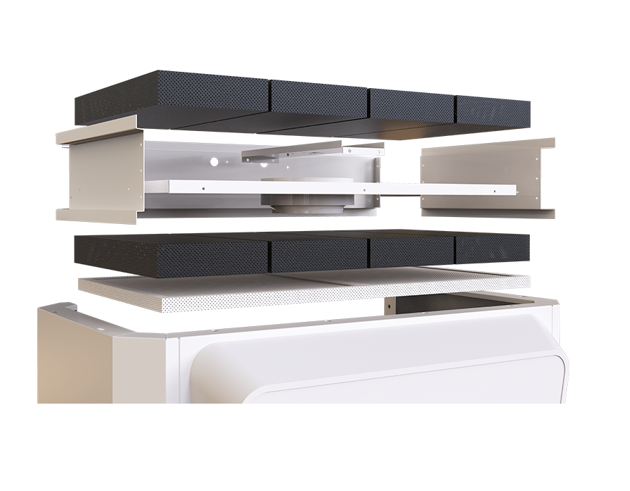
The filtration system is the core component of a ductless fume hood. Different filters should be selected according to the types of contaminants generated during laboratory operations to ensure optimal purification performance and laboratory safety.
5. Common Filter Types and Their Applications
(1) HEPA (High Efficiency Particulate Air) Filter
A.Function
Used for filtering airborne particles, dust, and microorganisms.
B.Filtration Efficiency
Equipped with an H14 HEPA filter capable of removing particles larger than 0.3 μm with an efficiency of over 99.995%.
C.Typical Applications
Powder handling
Particle-related experiments
Biological particle filtration
Dust-generating environments
(2)Organic Gas/Vapor Filter
A.Function
Used for adsorbing organic gases and volatile organic solvents.
B.Applicable Chemicals
C.Typical Applications
Organic chemistry experiments
VOC handling environments
Solvent preparation
Volatile organic compound processing
(3)Inorganic Gas/Vapor Filter
A.Function
Used for filtering toxic inorganic gases and vapors.
B.Applicable Chemicals
Hydrogen cyanide
Hydrogen chloride
Chlorine
Arsine
Phosgene
Diphosgene
Bromine
Dichloromethane
Lewisite
Mustard gas
Phosphine, etc.
C.Typical Applications
(4)Acid Gas/Vapor Filter
A.Function
Used for filtering acidic and corrosive gases.
B.Applicable Chemicals
C.Typical Applications
(5)Ammonia and Hydrogen Sulfide Filter
A.Function
Specially designed for filtering ammonia and hydrogen sulfide gases.
B.Applicable Chemicals
Ammonia
Hydrogen sulfide
Toxic smoke
Toxic substances
C.Typical Applications
(6)Universal Carbon Filter
A.Function
Capable of filtering:
B.Typical Applications
Suitable for laboratories handling multiple chemical categories or where contaminants are not clearly defined.
C.Important Notes
The following gases cannot be effectively adsorbed or catalytically filtered by activated carbon:
Carbon monoxide
Nitrogen
Hydrogen
Inert gases
D.Typical Filterable Chemicals
Organic Chemicals:
Carbon tetrachloride, carbon disulfide, chloroform, benzene, acetone, alcohols, etc.
Inorganic Chemicals:
Hydrogen cyanide, hydrogen chloride, chlorine, phosgene, phosphine, etc.
Acidic Chemicals:
Sulfur dioxide, chlorine, nitrogen oxides, etc.
Ammonia & Sulfide Chemicals:
Ammonia, hydrogen sulfide, etc.
(7)Formaldehyde Removal Filter
A.Function
Specially designed for efficient adsorption and decomposition of formaldehyde gas.
B.Typical Applications
(8)Pre-Filter (Primary Filter)
A.Function
Used for capturing large dust particles to protect the main filter and extend its service life.
B.Filtration Efficiency
Equipped with a G4 primary panel filter capable of removing particles larger than 10 μm with an efficiency of over 95%.
C.Typical Applications
Suitable for front-end air pre-filtration in all ductless fume hoods.
6. How to Properly Select Filters
When selecting filters for a ductless fume hood, the following factors should be considered:
(1) Chemical Type
Different chemicals require different filters:
Organic solvents → Organic filters
Acidic gases → Acid gas filters
Ammonia → Ammonia filters
(2)Chemical Concentration
High concentrations of volatile chemicals may require:
(3)Experimental Temperature
High temperatures accelerate chemical volatilization and reduce activated carbon adsorption efficiency. High-temperature experiments should therefore be carefully evaluated.
(4)Mixed Chemical Applications
If multiple chemicals are used simultaneously, a universal filter is recommended, or a professional filter configuration assessment should be conducted.
7. Conclusion
With advantages such as no external ductwork requirement, flexible installation, energy efficiency, environmental friendliness, and easy maintenance, ductless fume hoods have become an important part of modern laboratory safety systems.
Proper risk assessment, correct filter selection, and avoiding unsuitable chemicals and high-risk operating conditions are essential to ensuring the safe and efficient operation of ductless fume hoods.